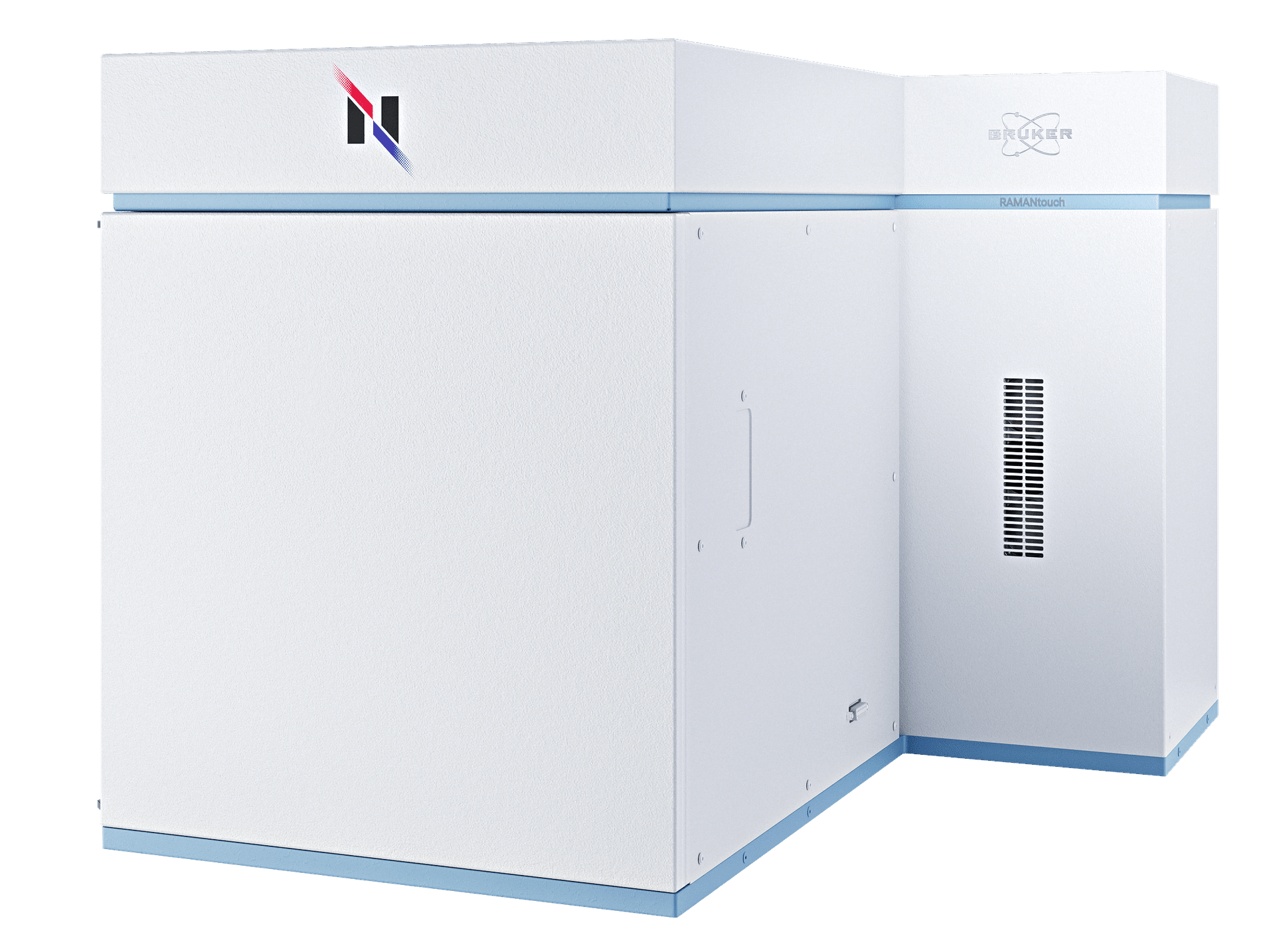
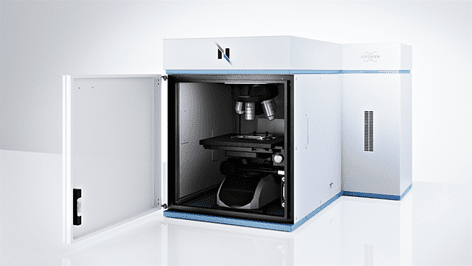
Description
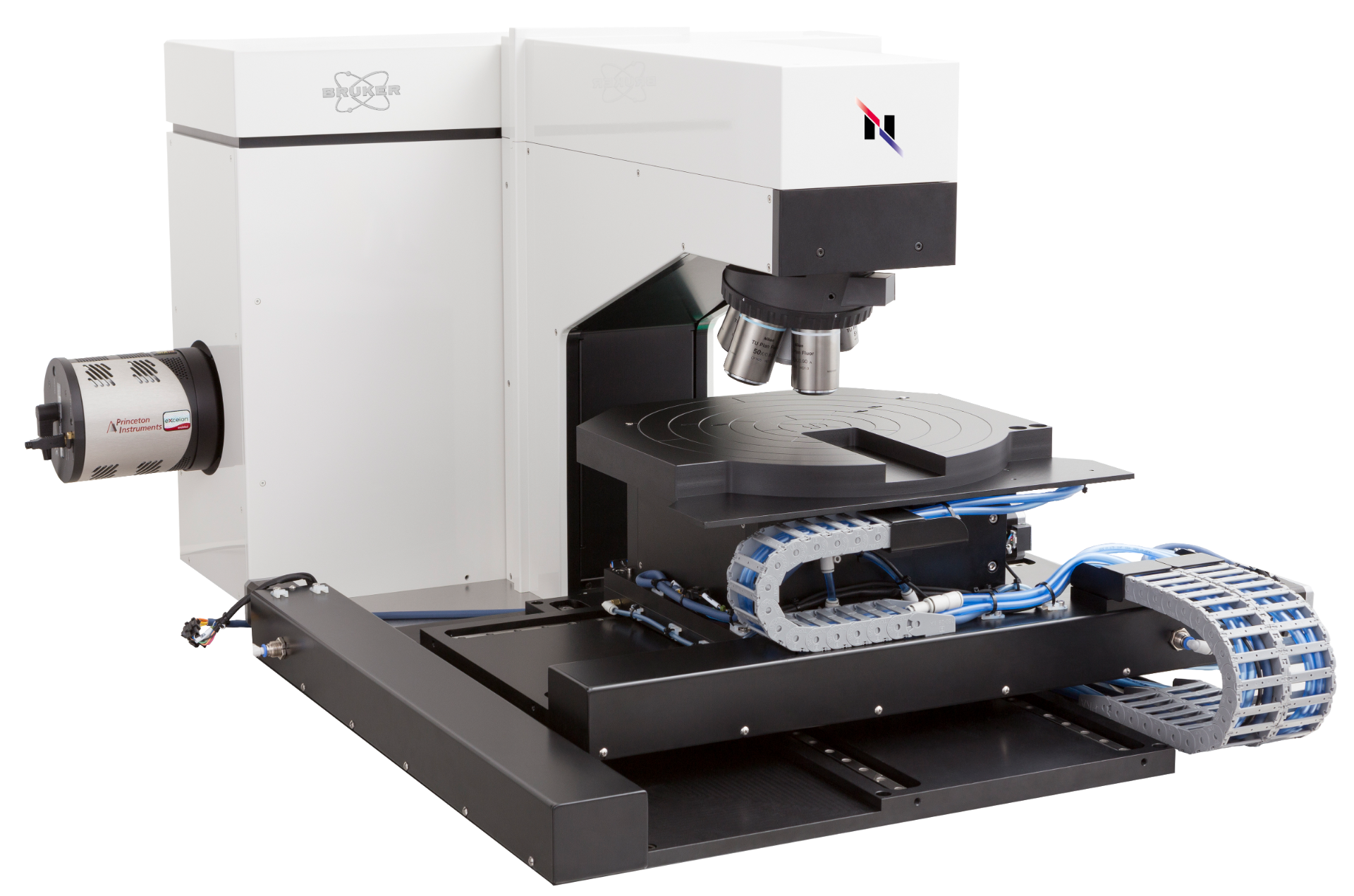
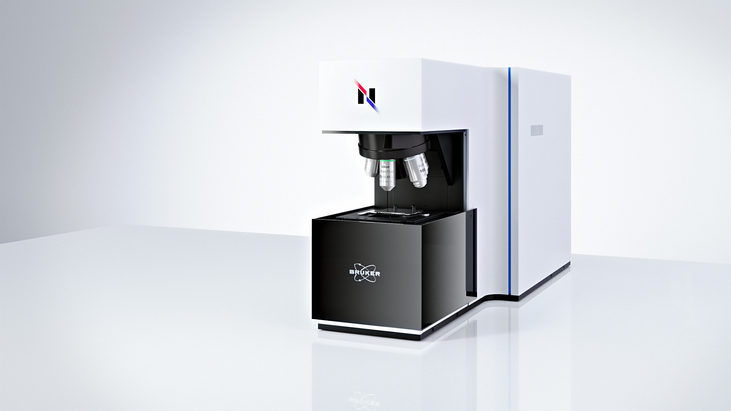
Nanophoton’s tech uses line-shaped laser illumination and a two-dimensional CCD to capture 400 spectra in one exposure. With laser scanning via galvanometer scanners, RAMANtouch achieves rapid and accurate Raman imaging of hundreds of thousands of pixels within minutes – no EMCCD required.
The RAMANtouch is a completely new approach compared to traditional Raman microscopes – and that’s why it achieves the impossible. Maximum imaging speed without any loss of spectral quality or spatial resolution.
The RAMANtouch offers:
- Ultra high-speed Raman imaging
- High spectral and spatial resolution
- Completely automated hardware
- Powerful analysis for 2D/3D Raman images
- Auto-calibration and auto-alignment
Maximum Raman performance in any measurement mode.
Laser Line Mode
- Ultra-fast Raman imaging by line illumination
- Homogeneous and deformation-free laser line over the entire field-of-view
- No emCCD needed
Laser Point Mode
- Perfect focus spot even at the edge of the field-of-view
- Hundreds times faster than motorized stage
- Up to 10 nm positioning accuracy
Benefits
Peak Raman imaging resolution.
Depth profiling Raman imaging in the XZ plane enables non-destructive analysis, such as examining multilayer films. Utilizing an oil-immersion objective lens significantly enhances spatial resolution, allowing for the detection of ultra-thin layers as fine as 250 nm.
Access the nanometer domain.
Raman microscopy offers essential insights into the identification of both organic and inorganic compounds, as well as crystal polymorphism. Unlike IR microscopy, Raman boasts advantages such as sub-micrometer spatial resolution and the capability to analyze samples in aqueous environments.
Applications
- Battery Research and Manufacturing: In battery research and industry Raman is implemented for assessing electrode stability and binder effectiveness, aiding in performance, optimization.
- Silicon and Semiconductors: In silicon-semiconductor materials, Raman aids in defect detection, fabrication optimization, and performance enhancement, ensuring efficient device functionality.
- Life Science: Raman in life science aids in disease diagnosis, bio- molecule study, understanding cellular processes, and structural analysis of biological samples.
- Pharmaceuticals: In the pharmaceutical industry, Raman microscopy monitors formulations, evaluates product quality, and analyzes ingredient distribution with precision.
- Minerals and Inorganics: Raman spectroscopy can analyze crystal structure, phase identification, composition, and defects in inorganic materials and minerals.
- Nano Carbon Materials: Raman microscopy aids in nano-carbon research and industry, analyzing graphene quality in CVD production, and characterizing carbon nanotubes for electronics optimization.
- Polymers and Plastics: In polymer and resin research and industry, Raman is utilized for analysis and characterization of the material for example in evaluating the cure degree and distribution of a resin.
- Food and Beverages: Raman is implemented in food science for quality control, contaminant detection, nutrient analysis, and understanding food composition.
Additional information